
Peak Shaving

Load Shifting
Backup Power
Renewable Integration
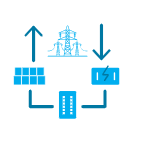
Grid Islanding
EV Charging Support
What is a microgrid and how is it different from the main utility grid?
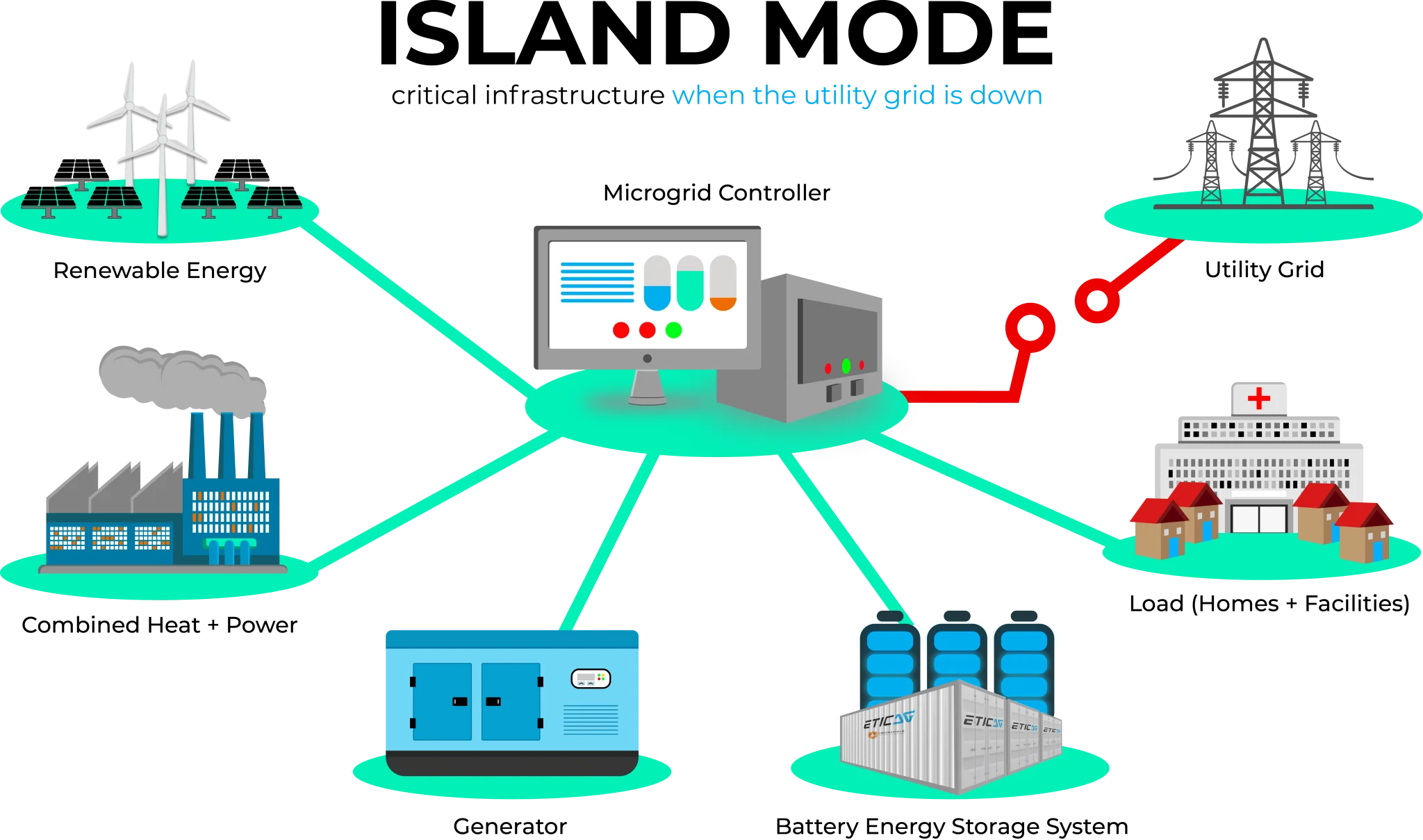
A microgrid is a localized energy system that can operate independently or alongside the main grid. It combines power generation (like solar), battery storage, and smart controls to deliver resilient, site-specific electricity—even when the utility grid is down.
Why do microgrids need battery storage?
Battery Energy Storage Systems (BESS) allow microgrids to store excess energy and deploy it during outages or high-demand periods. This enables true energy independence, load balancing, and integration of intermittent renewables like solar and wind.
How does ETICA BESS improve microgrid safety?
ETICA non-flammable, immersion-cooled BESS prevents thermal propagation and fire risk. This makes it easier to permit and safer to operate in sensitive environments like hospitals, schools, and data centers.
Are microgrids only for off-grid or remote locations?
No. Microgrids are increasingly used in urban, commercial, and industrial settings to improve energy reliability, reduce costs, and support sustainability goals—even when the main grid is available.
How much does a microgrid cost?
Costs typically range from $2M to $5M per megawatt, depending on technology and scale. While upfront investment is significant, long-term savings, resilience, and available incentives often deliver strong ROI.
What incentives or funding are available for microgrids?
Federal and state programs like DOE 40101(d), California SGIP, and FEMA BRIC offer funding for resilient energy infrastructure. ETICA systems also help reduce insurance and permitting costs thanks to their safety design.